Restoration, resources and design—connecting learning with life below water.
Restore aquatic life.Reimagine resources.
Restoring Taiwan’s Endangered Aquatic Plants on Campus
University Social Responsibility (USR) Program
MCUT responds to biodiversity loss through conservation of Taiwan’s native aquatic plants, guided by SDG 14, Life Below Water. Partners include the Formosa Plastics Group’s General Administration Office, Yangmei Senior High School and the Taishan District Office of New Taipei City. Together, they connect expertise and resources across industry, government, education and the community.
Native aquatic-plant restoration forms part of the general education course “Popular Science Education on the Marine Environment.” A campus ecological channel provides suitable growing conditions for threatened plants and serves as a practical learning site. Students from Xinzhuang, Taishan, Wugu and Linkou can explore ecological conservation here, extending sustainability education beyond the university.
In 2025, MCUT unveiled a Taiwan Endangered Species Restoration sign to formally launch the campus aquatic-plant restoration program. The collection comprises ten locally named aquatic plants: heterophyllous, thread-leaved, long-stalked, Longtan, sessile-flowered and Taoyuan Limnophila, Hydrolea zeylanica, yellow water lily, Yilan Hygrophila and Philydrum lanuginosum.
Linking restoration with formal coursework takes university learning beyond the classroom. Students move from theoretical understanding to practical care of living habitats, developing the knowledge and skills needed to protect the environment.
The ecological channel also serves nearby schools and communities as a place for hands-on environmental education. By bringing together partners and resources, MCUT creates learning sites with both ecological and educational value. These shared activities cultivate local students’ commitment to sustainability and make the campus a setting for SDG action and long-term biodiversity conservation.


Sustainable Reuse of Eggshells and Oyster Shells
University Social Responsibility (USR) Program
MCUT’s Sustainable Materials Regeneration Project explores ways to reuse eggshell waste and reduce its environmental burden. Increasing quantities from the campus and surrounding community require better management. The project develops sustainable materials for use with ultra-high-performance concrete (UHPC), demonstrating opportunities for resource reuse and carbon reduction.
Discussions with experts expanded the work to discarded oyster shells. Their composition is similar to that of eggshells, but their greater hardness makes processing more challenging. Japan’s Miyagi Prefecture has a major oyster industry and faces environmental and social challenges associated with the 2011 tsunami and an ageing population. International cooperation allowed the project to connect this issue with MCUT’s work on local eggshell waste.
The project combines materials research with design education, international exchange and public exhibitions. Industrial Design courses introduce circular-economy and social-design concepts. Students collect and process eggshells, then develop materials suitable for UHPC applications and a range of designed products.
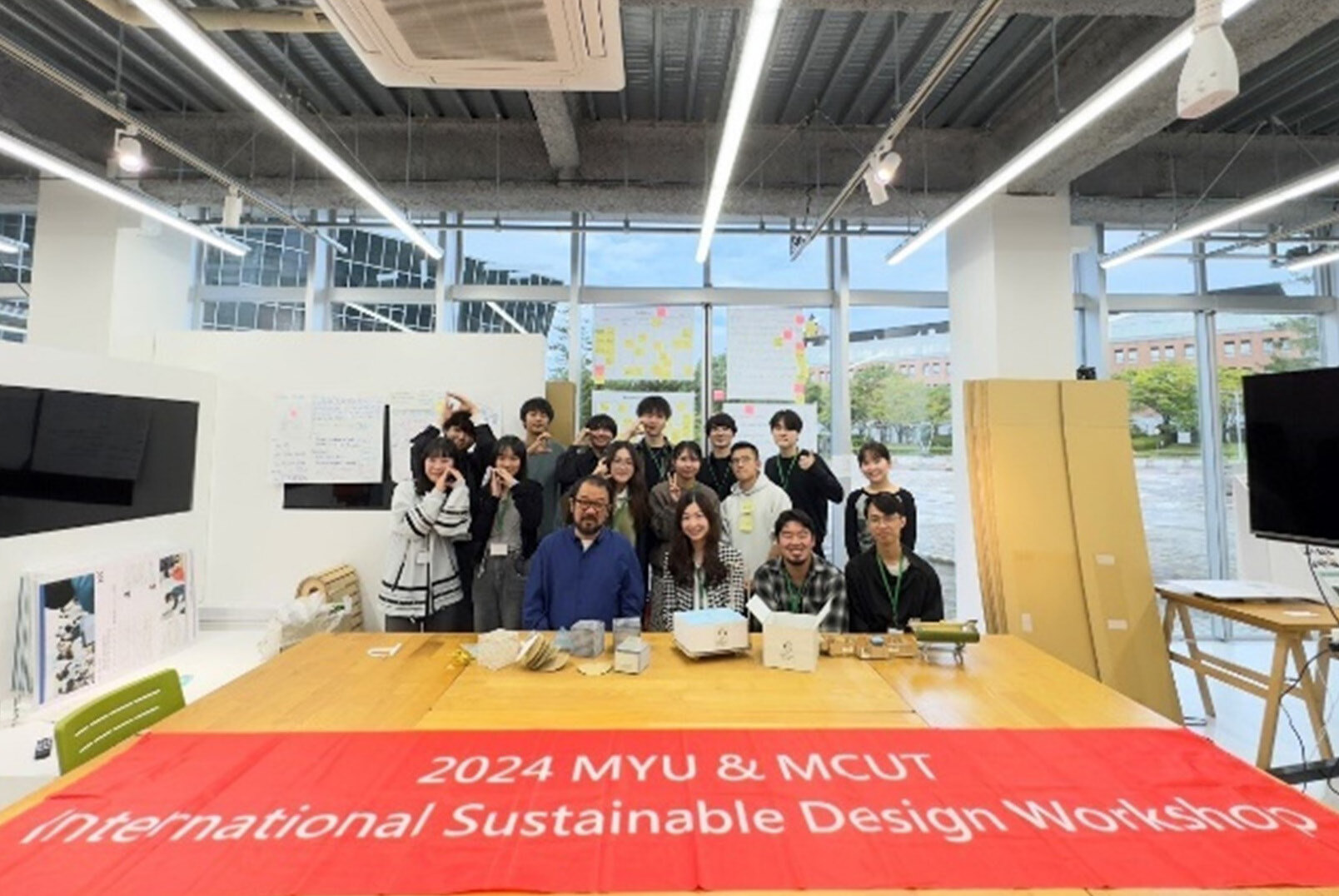
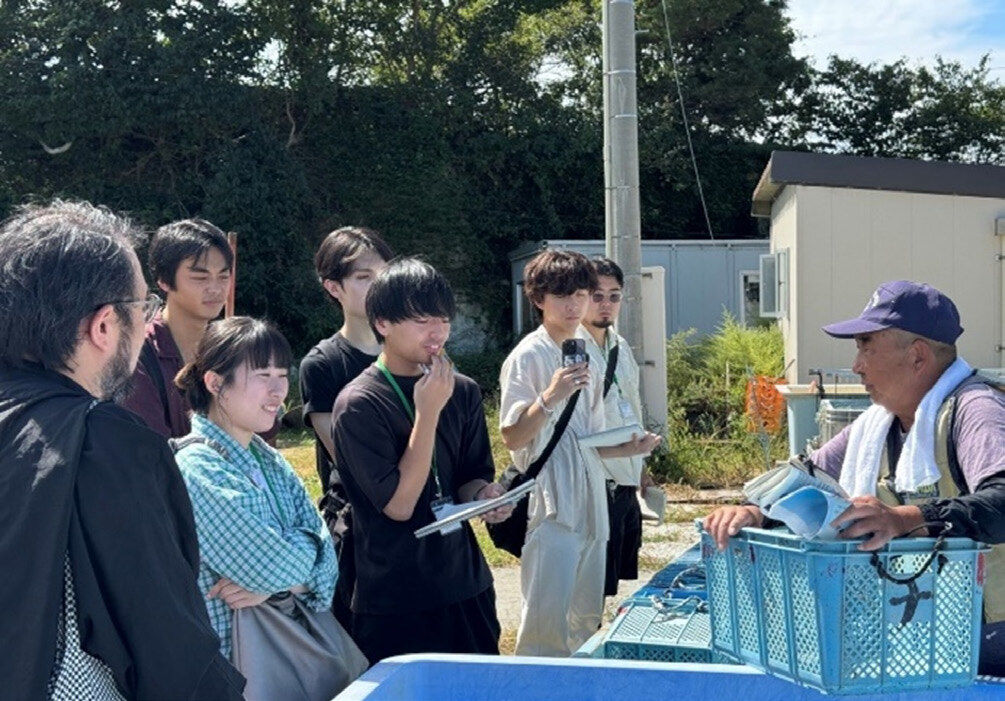
International workshops bring in experts to share experience in designing with regenerated waste materials. Students also conducted fieldwork in Japan’s Urato Islands, interviewing oyster producers and learning about local needs. Design thinking and prototyping led to four proposed solutions: FILSTER, Shipping Oyster Shells System, MONEYSTER, and Oyster Shell & Environment.
These proposals received second prize, the “Best Award,” at Miyagi University’s inaugural MYU idea competition, DERUCON 2024. A two-week exhibition at Taishan Library subsequently shared the project’s results with the public.
The project connects material innovation with design, strengthens students’ practical skills and international outlook, and promotes sustainable-design knowledge. Its activities demonstrate the value of environmental education, international collaboration and local revitalization.